Showing posts with label Science. Show all posts

Protected areas not safe from light pollution


Protected areas, such as nature reserves and national parks, are thought to provide a refuge for wildlife, but according to a new study, many of these areas are not safe from light pollution. Thanks to increasing urbanization, many nocturnal skies are no longer dark. 

Although helpful for humans, artificial night lighting can impact nocturnal wildlife by disrupting natural reproductive cycles, disorienting migratory species, and increasing the risk of predation. To assess how well protected areas shelter wildlife from light pollution and preserve natural darkness, researchers analyzed satellite images of Earth collected at night by the Defense Meteorological Satellite Program between 1992 and 2010. Individual pixels, representative of approximately 3 square kilometers, were assigned a number based on their degree of illumination, ranging from 0 (complete darkness) to 63 (brightly lit urban areas). 

More than 170,000 unique protected areas were identified using the International Union for Conservation of Nature’s World Database on Protected Areas. 

The degree of nighttime illumination was then compared with unprotected areas for each continent over the 2 decades. Although 86% of the world’s landmasses remain in relative darkness at night, darkness declined slightly in all regions over the study period.

 Protected areas were still generally darker than unprotected areas, yet protected areas experienced widespread increases in nighttime light exposure between 1992 and 2010, the team reports online this month in Conservation Biology. In Europe, Asia, and South and Central America, up to 42% of protected areas have experienced significant increases in nighttime lighting. 

A smaller percentage of protected areas in Europe (24%) and North America (17%) exhibited high levels of nighttime lighting in all years. Based on their findings, researchers propose reduced lighting zones be established around existing refuges to preserve their natural darkness and biodiversity. 

A step closer to explaining high-temperature superconductivity?


For years some physicists have been hoping to crack the mystery of high-temperature superconductivity—the ability of some complex materials to carry electricity without resistance at temperatures high above absolute zero—by simulating crystals with patterns of laser light and individual atoms. Now, a team has taken—almost—the next-to-last step in such "optical lattice" simulation by reproducing the pattern of magnetism seen in high-temperature superconductors from which the resistance-free flow of electricity emerges.

"It's a very big improvement over previous results," says Tilman Esslinger, an experimentalist at the Swiss Federal Institute of Technology in Zurich, who was not involved in the work. "It's very exciting to see steady progress."

An optical lattice simulation is essentially a crystal made of light. A real crystal contains a repeating 3D pattern of ions, and electrons flow from ion to ion. In the simulation, spots of laser light replace the ions, and ultracold atoms moving among spots replace the electrons. Physicists can adjust the pattern of spots, how strongly the spots attract the atoms, and how strongly the atoms repel one another. 

That makes the experiments ideal for probing physics such as high-temperature superconductivity, in which materials such as mercury barium calcium copper oxide carry electricity without resistance at temperatures up to 138 K, far higher above absolute zero than ordinary superconductors such as niobium can.

Just how the copper-and-oxygen, or cuprate, superconductors work remains unclear. The materials contain planes of copper and oxygen ions with the coppers arranged in a square pattern. Repelling one another, the electrons get stuck in a one-to-a-copper traffic jam called a Mott insulator state. They also spin like tops, and at low temperatures neighboring electrons spin in opposite directions, creating an up-down-up-down pattern of magnetism called antiferromagnetism. Superconductivity sets in when impurities soak up a few electrons and ease the traffic jam. The remaining electrons then pair to glide freely along the planes.

Theorists do not yet agree how that pairing occurs. Some think that wavelike ripples in the antiferromagnetic pattern act as a glue to attract one electron to the other. Others argue that the pairing arises, paradoxically, from the repulsion among the electrons alone. Theorists can write down a mathematical model of electrons on a checkerboard plane, known as the Fermi-Hubbard model, but it is so hard to "solve" that nobody has been able to show whether it produces superconductivity.

Experimentalists hope to reproduce the Fermi-Hubbard model in laser light and cold atoms to see if it yields superconductivity. In 2002, Immanuel Bloch, a physicist at the Max Planck Institute for Quantum Optics (MPQ) in Garching, Germany, and colleagues realized a Mott insulator state in an optical lattice. Six years later, Esslinger and colleagues achieved the Mott state with atoms with the right amount of spin to mimic electrons. Now, Randall Hulet, a physicist at Rice University in Houston, Texas, and colleagues have nearly achieved the next-to-last step along the way: antiferromagnetism.

Hulet and colleagues trapped between 100,000 and 250,000 lithium-6 atoms in laser light. They then ramped up the optical lattice and ramped it back down to put them in order. Shining laser light of a specific wavelength on the atoms, they observed evidence of an emerging up-down-up-down spin pattern. The laser light was redirected, or diffracted, at a particular angle by the rows of atoms—just as x-rays diffract off the ions in a real crystal. Crucially, the light probed the spin of the atoms: The light wave flipped if it bounced off an atom spinning one way but not the other. Without that flipping, the diffraction wouldn't have occurred, so observation confirms the emergence of the up-down-up-down pattern, Hulet says.

Hulet's team solved a problem that has plagued other efforts. Usually, turning the optical lattice on heats the atoms. To avoid that, the researchers added another laser that slightly repelled the atoms, so that the most energetic ones were just barely held by the trap. Then, as the atoms heated, the most energetic ones "evaporated" like steam from hot soup to keep the other ones cool, the researchers report online this week in Nature. They didn't quite reach a full stable antiferromagnetic pattern: The temperature was 40% too high. But the technique might get there and further, 

Hulet says. "We don't have a good sense of what the limit of this method is," he says. "We could get a factor of two lower, we could get a factor of 10 lower."

"It is indeed very promising," says Tin-Lun "Jason" Ho, a theorist at Ohio State University, Columbus. Reducing the temperature by a factor of two or three might be enough to reach the superconducting state, he says. However, MPQ's Bloch cautions that it may take still other techniques to get that cold. 

"There are several cooling techniques that people are developing and interesting experiments coming up," he says.

Physicists are also exploring other systems and problems with optical lattices. The approach is still gaining steam, Hulet says: "It's an exciting time."

Article: ScienceMag

[VIDEO] Australian researchers unveil world's first 3D printed jet engine


Australian researchers unveiled the world's first 3D-printed jet engine on Thursday, a manufacturing breakthrough that could lead to cheaper, lighter and more fuel-efficient jets.

Engineers at Monash University and its commercial arm are making top-secret prototypes for Boeing Co, Airbus Group NV, Raytheon Co and Safran SA in a development that could be the savior of Australia's struggling manufacturing sector.


"This will allow aerospace companies to compress their development cycles because we are making these prototype engines three or four times faster than normal," said Simon Marriott, chief executive of Amaero Engineering, the private company set up by Monash to commercialize the product.

Marriott said Amaero plans to have printed engine components in flight tests within the next 12 months and certified for commercial use within the next two to three years.

Australia has the potential to corner the market. It has one of only three of the necessary large-format 3D metal printers in the world - France and Germany have the other two - and is the only place that makes the materials for use in the machine.

It is also the world leader in terms of intellectual property (IP) regarding 3D printing for manufacturing.


"We have personnel that have 10 years experience on this equipment and that gives us a huge advantage," Marriott told Reuters by phone from the Avalon Airshow outside Melbourne.

3D printing makes products by layering material until a three-dimensional object is created. Automotive and aerospace companies use it for producing prototypes as well as creating specialized tools, moldings and some end-use parts.

Marriott declined to comment in detail on Amaero's contracts with companies, including Boeing and Airbus, citing commercial confidentiality. Those contracts are expected to pay in part for the building of further large format printers, at a cost of around A$3.5 million ($2.75 million) each, to ramp up production of jet engine components.

3D printing can cut production times for components from three months to just six days.

Ian Smith, Monash University's vice-provost for research, said it was very different to the melting, molding and carving of the past.


"This way we can very quickly get a final product, so the advantages of this technology are, firstly, for rapid prototyping and making a large number of prototypes quickly," Smith said. "Secondly, for being able to make bespoke parts that you wouldn't be able to with classic engineering technologies."


(Editing by Paul Tait)

Scientists discover black hole so big it contradicts growth theory


Scientists say they have discovered a black hole so big that it challenges the theory about how they grow.

Scientists said this black hole was formed about 900 million years after the Big Bang.

But with measurements indicating it is 12 billion times the size of the Sun, the black hole challenges a widely accepted hypothesis of growth rates.

"Based on previous research, this is the largest black hole found for that period of time," Dr Fuyan Bian, Research School of Astronomy and Astrophysics, Australian National University (ANU), told Reuters on Wednesday.

"Current theory is for a limit to how fast a black hole can grow, but this black hole is too large for that theory."

The creation of supermassive black holes remains an open topic of research. However, many scientists have long believed the growth rate of black holes was limited.

Black holes grow, scientific theory suggests, as they absorb mass. However, as mass is absorbed, it will be heated creating radiation pressure, which pushes the mass away from the black hole.

"Basically, you have two forces balanced together which sets up a limit for growth, which is much smaller than what we found," said Bian.

The black hole was discovered a team of global scientists led by Xue-Bing Wu at Peking University, China, as part of the Sloan Digital Sky Survey, which provided imagery data of 35 percent of the northern hemisphere sky.

The ANU is leading a comparable project, known as SkyMapper, to carry out observations of the Southern Hemisphere sky.

Bian expects more black holes to be observed as the project advances.

(Editing by Robert Birsel)

Pink cloud from NASA rocket lights up sky over U.S. Southwest


An unusual pink cloud that lit up the sky over New Mexico and Arizona early on Wednesday was caused by a NASA research rocket launched to study the outer reaches of Earth's atmosphere, scientists said.

The cloud stunned many residents who posted photographs online and speculated on social media about its cause, with theories ranging from shootings stars to the sprightly fictional character Peter Pan.

But researchers at the White Sands Missile Range in southern New Mexico said the fluffy phenomenon had a much more Earth-bound explanation.

They said it was caused by a Terrier-Black Brant rocket designed to reach an altitude of more than 100 miles (160 km) that released a small quantity of vapor - "about as much as is contained in a BBQ grill propane tank" - into the near-vacuum of space to study the formation of the ionosphere.

The ionosphere is the outer layer of the atmosphere that extends to about 370 miles (600 km) into space.

The White Sands scientists said in a statement the colorful cloud was formed "as the sun illuminates the vapor before it diffuses harmlessly away into space."

Ground stations across the U.S. Southwest took a variety of measurements during the experiment, the researchers said. The data will be used to develop enhanced models of ionospheric disturbances in near-Earth space and their effects on modern technologies.

(Reporting by Daniel Wallis in Denver; Editing by Bill Trott)

NASA investigating helmet water leak after spacewalk


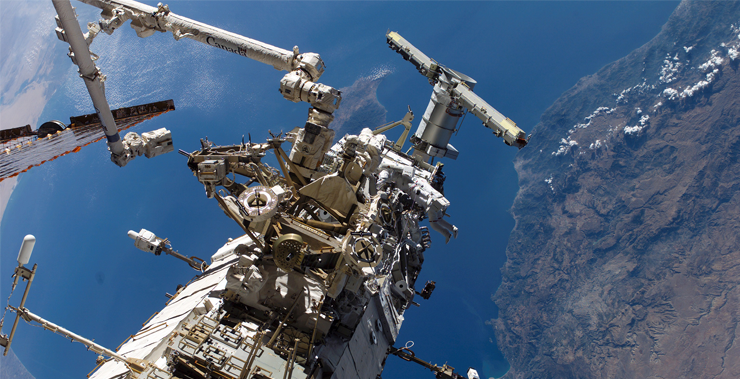
Two U.S. astronauts finished a 6-1/2-hour spacewalk on Wednesday to prepare parking spots for new commercial space taxis then discovered water had leaked into a spacesuit helmet, a problem that led to the near-drowning of another astronaut in 2013, officials said.

Unlike the 2013 incident, astronaut Terry Virts was not in any danger, said NASA mission commentator Rob Navias.

Virts discovered a small amount of water was floating in his helmet after he and spacewalk partner Barry "Butch" Wilmore had returned to the station's airlock following a successful outing.

"I really can't see any immediate danger," station flight engineer Samantha Cristoforetti of Italy radioed to ground control teams at Mission Control in Houston.

In July 2013, NASA hastily aborted a spacewalk when the helmet worn by Italian astronaut Luca Parmitano began filling with water. By the time he returned to the airlock, his vision was blocked and communications equipment had stopped working.

NASA suspended spacewalks while engineers searched for the cause of the problem.

Engineers do not yet know why Virts’ helmet leaked, nor if the issue is related to the previous problem, Navias said.

NASA managers plan to meet on Friday to decide whether to proceed with Sunday’s outing, he added,

During Wednesday’s spacewalk, the astronauts removed a cover protecting the space shuttle’s docking port, one of two sites being reconfigured for new spaceships under development by Boeing and Space Exploration Technologies, or SpaceX.

The work paves the way for the arrival later this year of two international docking port adapters, which will be installed during four more spacewalks NASA plans in 2015.

The spacewalkers finished routing two power and data cables on Wednesday then greased the grapple fixture at the end of the station’s robot arm.

They also prepared the Tranquility connecting node for the September arrival of an experimental inflatable habitat built by privately owned Bigelow Aerospace. Sunday's spacewalk is devoted to setting up a new communications system for the visiting vehicles.

The station, a partnership of 15 nations, is a collection of laboratories and platforms for materials and life science experiments, Earth studies, physics and other investigations that take advantage of the microgravity environment and unique vantage point of space. The Russian space agency Roscosmos said on Tuesday it would remain part of the international outpost until 2024, a four-year extension proposed by the United States.

Source: Reuters

Brain activity shows infants are hardwired to link images, sounds as they learn to speak

Child learning (stock image). An international team of researchers in the UK and in Japan examined the electrical activities of the brain in 11 month-olds at the initial stages of word learning.
Credit: © mitgirl / Fotolia

New research examining electrical brain activity in infants suggests that we are biologically predisposed to link images and sounds to create language.

In a paper published in the journal Cortex, an international team of researchers in the UK and in Japan, including those at the University of Warwick, examined the electrical activities of the brain in 11 month-olds at the initial stages of word learning.

They used novel words ('kipi' or 'moma') to refer to pictures of a spiky or a rounded shape. They found the infants very quickly began to match the word to the image.

One of the authors, Dr Sotaro Kita from the University of Warwick said: 

"The oscillatory activity of the infant brainincreased when the word they heard matched the shape they were shown, compared to when it did not. This suggests that the infant brain spontaneously engages in matching visual and auditory input."

An analysis of how different areas of the brain are communicating with each other also showed surprising results.

Dr Kita said: "Communication traffic between regions of the brain was light when the word matched the shape, but the traffic became heavy especially in the left hemisphere, where language is typically processed, when the word did not match the shape. The left-hemisphere had to work harder to associate visual and auditory input when they are not a natural match."


"The N400 response was higher for mismatching word-image pairs, which is a classic index of word meaning processing in the brain. This indicates that the infants were trying to work out the meaning of the novel words."

Dr Kita added that these findings reveal that sound symbolism allows 11-month-old infants to spontaneously bind the speech sound and the visual referent, and this spontaneous binding may provide infants an insight that spoken words refers to objects you can see in the world.


He said: "It is this cross-modal mapping between sound and image that plays a key role in the origin and development of language-learning."


Story Source: The above story is based on materials provided by University of Warwick
Note: Materials may be edited for content and length.

Before decrying the latest cyberbreach, consider your own cyberhygiene


The theft of 80 million customer records from health insurance company Anthem earlier this month would be more shocking if it were not part of a larger trend. In 2013, the Department of Defense and some US states were receiving 10–20 million cyberattacks per day. By 2014, there was a 27% increase in successful attacks, culminating with the infamous hack of Sony Pictures.

Much of the media focus is on the losses rather than the process by which such breaches take place. Consequently, instead of talking about how we could stop the next attack, people and policymakers are discussing punitive actions. But not enough attention is given to the actions of individual end users in these cyberattacks.


We are the unintentional insiders

Many of these hacking attacks employ simple phishing schemes, such as an e-card on Valentine’s Day or a notice from the IRS about your tax refund. They look innocuous but when clicked, they open virtual back doors into our organizations.

It is you and I who click on these links and become the “unintentional insiders” giving the hackers access and helping spread the infection. Such attacks are hard to detect using existing anti-virus programs that, like vaccines, are good at protecting systems from known external threats — not threats from within.

Clearly, this virtual battle cannot be won using software alone. In the same way personal hygiene stymies the spread of infectious disease, fixing this cyber quandary will require all of us to develop better cyberhygiene. We need to begin by considering the cyberbehaviors that lead to breaches.

My research on phishing points to three. Firstly, most of us pay limited attention to email content, focusing instead on quick clues that help expedite judgment. A picture of an inexpensive heart-shaped valentine gift gets attention, oftentimes at the cost of looking at the sender’s email address.

This is coupled by our ritualized media habits that our always-on and accessible smartphones and tablets enable. Many of us check emails throughout the day whenever an opportunity or notification arises, even when we know it is dangerous to do so, such as while driving. Such habitual usage significantly increases the likelihood of someone opening an email as matter of routine.

And finally, many of us just aren’t knowledgeable about online risks. We tend to hold what I call “cyber risk beliefs” about the security of an operating system, the safety of a program, or the vulnerability of an online action, most of which are flawed.

Sit on down and get educated.  Matt Grimm, CC BY-NC-SA


Cleaning up our cyberhygiene act

Developing cyberhygiene requires all of us — netizens, educators, local government, and federal policymakers — to actively engage in creating it.

To begin, we must focus on educating everyone about the risks of online actions. Most children don’t learn about cybersafety until they reach high school; many until college. More troublingly, some learn through risky trials or the reports of someone else’s errors.

In an age where online data remain on servers perpetually, the consequences of a privacy breach could haunt a victim forever. Expanding federal programs such as the National Initiative for Cybersecurity Education, which presently aims to inspire students to pursue cybersecurity careers, could help achieve universal cybersecurity education.

Second, we must train people to become better at detecting online fraud. At the very least, all of us must be made aware of online security protocols, safe browsing practices, secure password creation and storage, and on procedures for sequestering or reporting suspicious activity. Flawed cyber-risk beliefs must be replaced with objective knowledge through training.

Although some training programs address these issues, most target businesses that can pay for training. Left out are households and other vulnerable groups, which, given the recent “bring your own device to work” (BYOD) trend, increases the chances that a compromised personal device brings a virus into the workplace. Initiatives such as the Federal Cybersecurity Training Events that presently offer free workshops to IT professionals are steps in this direction, but the emphasis must move beyond training specialists to training the average netizen.

President Obama calls for beefing up cybersecurity laws on Feb 13, 2015. Kevin Lamarque / Reuters

Finally, we must centralize the reporting of cyber breaches. The President’s proposed Personal Data Notification and Protection Act would make it mandatory for companies to report data breaches within 30 days. But it still doesn’t address who within the vast network of enforcement agencies is responsible for resolution. Having a single clearing house that centralizes and tracks breaches, just like the Centers for Disease Control and Prevention tracks disease outbreaks across the nation, would make remediation and resource allocation easier.

Across the Atlantic, the City of London Police created a system called Action Fraud, which serves as a single site for reporting all types of cyberattacks, along with a specialized team called FALCON to quickly respond to and even address impending cyberattacks. Our city and state police forces could do likewise by channeling some resource away from fighting offline crime. After all, real world crime is at a historically low rate while cybercrimes have grown exponentially.


[EXCLUSIVE] If you are still thinking that there are 9 planets in our Solar System...?! Think again !


Way out beyond Mars, but before you get to Jupiter, is a planet.

You read that right. There's a planet between Mars and Jupiter.

You may not have heard of it, but it was discovered in 1801 -- 129 years before Pluto. It originally was called a planet, then later an asteroid and now it's called a dwarf planet.

Its name is Ceres (pronounced like series) and you'll likely be hearing a lot more about it in the coming weeks.

Ceres is one of five named dwarf planets recognized by NASA and the International Astronomical Union (IAU). The other four are Eris, Pluto, Makemake and Haumea.

But Ceres is the first of these worlds to get a visitor from Earth: NASA's Dawn spacecraft is arriving on March 6.


"Ceres is a 'planet' that you've probably never heard of," said Robert Mase, Dawn project manager at NASA's Jet Propulsion Laboratory in Pasadena, California.

Ceres may be considered a dwarf planet, but it's "the giant of the main asteroid belt," Dr. Marc Rayman, chief engineer and mission director of the Dawn mission, told CNN. "It is not only the largest object between Mars and Jupiter, it is the largest object between the sun and Pluto that a spacecraft has not yet visited."

"We are tremendously excited," Rayman said. "We have guided this robotic probe for well over seven years on an interplanetary journey of more than 3 billion miles. Along the way we sailed past Mars. We spent 14 months orbiting and scrutinizing the giant protoplanet Vesta. ... Now, finally, we are on the verge of conducting the first exploration ever of the first dwarf planet."

New images from Dawn, taken when the probe was about 52,000 miles (83,000 kilometers) from Ceres, show craters and what NASA calls mysterious bright spots. Rayman said its surface is pretty beaten up and that the craters that are "scars from life in the rough and tumble asteroid belt."

Why study a beaten-up space rock? Rayman said because it's a survivor -- and a mysterious one. Made up of rock and ice, Ceres may even have liquid water deep beneath its surface -- "perhaps as ponds or lakes or even oceans," Rayman said.

He said Ceres "appears to have been in the process of growing to become a full-sized planet when Jupiter terminated its growth nearly 4.6 billion years ago."

So by studying Ceres, scientists learn more about how the rest of the solar system formed. And he said, we should study Ceres because it's there -- and we need to understand the universe we live in. 

"We should study it because we hunger for knowledge and understanding. Grand undertakings like this nurture our spirit," Rayman said.

Rayman said that if you had learned about the solar system 200 years ago, "you would have learned that Ceres was a planet, just as people who learned about the solar system in more recent generations learned that Pluto is."

Speaking of Pluto, the most famous of the dwarf planets gets its own visitor in July. The New Horizons spacecraft is closing in for a flyby of Pluto and its moons.

This talk of planets and dwarf planets is still a little confusing, so here's the most recent tally: NASA currently recognizes eight planets: Mercury, Venus, Earth, Mars, Jupiter, Saturn, Uranus and Neptune, and the five named dwarf planets we listed earlier.

But a sixth possible dwarf planet already is on NASA's watch list.

Called 2012 VP113, it's believed to be one of the most distant objects in our solar system. On its Solar System Exploration website, NASA says the object was nicknamed "Biden" after Vice President Joseph Biden because of the VP in its initial designation. It will be up to the IAU to decide whether i2012 VP113 is a dwarf planet and whether it gets an official name.

But expect the numbers for planets in our solar system to keep changing. Mike Brown, the CalTech astronomy professor who helped discover dwarf planet Eris and who takes responsibility for killing off Pluto as a full-fledged planet, has his own tally listing more than 360 possible dwarf planets. And NASA has said there may be many more dwarf planets that we haven't found yet.

So Ceres, and its cousins, may soon outnumber the traditional planets you learned about in grade school.

VIDEO of the Ceres Planet here

Read more on CNN


How the Internet could make us smarter


A few years ago, researchers demonstrated that people had poorer memory for information that they were told had been saved to a computer. Technophobes jumped on the finding. 

"Imagine that in the future people become so used to external access for any form of reference that they have not internalized any facts at all," wrote Susan Greenfield.

Of course there are many flaws to this logic, not least that the old fashioned act of writing information down can also lead to increased forgetting. A new study has focused on another important point: forgetting information that we know is externally available could be advantageous - allowing us to free up cognitive resources to better learn new information.

Benjamin Storm and Sean Stone tested this possibility across three studies involving dozens of undergrads. The format was similar throughout. The students started by studying a list of ten words in one computer file, which they would be tested on later. Then they moved onto a second file with a new list of words to study. There was a 20-second delay then they were tested on this second list.

The critical finding is that the students performed better at remembering this second list if they were earlier given the chance to save the first list to computer. It's as if knowing the first list was stored on computer prompted them to deliberately forget it, so that they could focus all their mental resources on the second list.

Further details back up this interpretation. When the computer saving process was made unreliable - files kept getting lost - the saving process no longer boosted the students' performance on the second list. Also, when the first list was made up of just two words, meaning it placed little strain on memory, the act of saving it to computer no longer made a difference to memory for the second list.

Why else might saving information to computer help benefit new learning? Another intriguing suggestion made by the researchers is that the act of saving could provide the basis for an "event boundary" in memory, helping avoid confusion between the first and second lists. They further speculate that saving to computer likely doesn't just aid the learning of further information, but could also free up mental resources that underlie thinking and problem solving.

The researchers conclude with a Sherlock Holmes quote that captures the concept of adaptive forgetting: "... a man should keep his little brain-attic stocked with all the furniture that he is likely to use, and the rest he can put away in the lumber-room of his library, where he can get it if he wants it."

This article originally appeared at Research Digest. Copyright 2015. Follow Research Digest on Twitter.


Newborn neurons in adult brain may help us adapt to environment


The discovery that the human brain continues to produce new neurons in adulthood challenged a major dogma in the field of neuroscience, but the role of these neurons in behavior and cognition is still not clear. In a review article published by Cell Press February 21st in Trends in Cognitive Sciences, Maya Opendak and Elizabeth Gould of Princeton University synthesize the vast literature on this topic, reviewing environmental factors that influence the birth of new neurons in the adult hippocampus, a region of the brain that plays an important role in memory and learning.

The authors discuss how the birth of such neurons may help animals and humans adapt to their current environment and circumstances in a complex and changing world. They advocate for testing these ideas using naturalistic designs, such as allowing laboratory rodents to live in more natural social burrow settings and observing how circumstances such as social status influence the rate at which new neurons are born.

"New neurons may serve as a means to fine-tune the hippocampus to the predicted environment," Opendak says. "In particular, seeking out rewarding experiences or avoiding stressful experiences may help each individual optimize his or her own brain. However, more naturalistic experimental conditions may be a necessary step toward understanding the adaptive significance of neurons born in the adult brain."

In recent years, it has become increasingly clear that environmental influences have a profound effect on the adult brain in a wide range of mammalian species. Stressful experiences, such as restraint, social defeat, exposure to predator odors, inescapable foot shock, and sleep deprivation, have been shown to decrease the number of new neurons in the hippocampus. By contrast, more rewarding experiences, such as physical exercise and mating, tend to increase the production of new neurons in the hippocampus.

The birth of new neurons in adulthood may have important behavioral and cognitive consequences. Stress-induced suppression of adult neurogenesis has been associated with impaired performance on hippocampus-dependent cognitive tasks, such as spatial navigation learning and object memory. Stressful experiences have also been shown to increase anxiety-like behaviors that are associated with the hippocampus. In contrast, rewarding experiences are associated with reduced anxiety-like behavior and improved performance on cognitive tasks involving the hippocampus.

Although scientists generally agree that our day-to-day actions change our brains even in adulthood, there is some disagreement on the adaptive significance of new neurons. For instance, the literature presents mixed findings on whether new neurons generated under a specific experimental condition are geared toward the recognition of that particular experience or if they provide a more naive pool of new neurons that enable environmental adaptation in the future.

Gould and her collaborators recently proposed that stress-induced decreases in new neuron formation might improve the chances of survival by increasing anxiety and inhibiting exploration, thereby prioritizing safety and avoidant behavior at the expense of performing optimally on cognitive tasks. On the other hand, reward-induced increases in new neuron number may reduce anxiety and facilitate exploration and learning, leading to greater reproductive success.

"Because the past is often the best predictor of the future, a stress-modeled brain may facilitate adaptive responses to life in a stressful environment, whereas a reward-modeled brain may do the same but for life in a low-stress, high-reward environment," says Gould, a professor of psychology and neuroscience at Princeton University.
However, when aversive experiences far outnumber rewarding ones in both quantity and intensity, the system may reach a breaking point and produce a maladaptive outcome. For example, repeated stress produces continued reduction in the birth of new neurons, and ultimately the emergence of heightened anxiety and depressive-like symptoms.

"Such a scenario could represent processes that are engaged under pathological conditions and may be somewhat akin to what humans experience when exposed to repeated traumatic stress," Opendak says.

Because many studies that investigate adult neurogenesis use controlled laboratory conditions, the relevance of the findings to real-world circumstances remains unclear. The use of a visible burrow system--a structure consisting of tubes, chambers, and an open field--has allowed researchers to recreate the conditions that allow for the production of dominance hierarchies that rats naturally form in the wild, replicating the stressors, rewards, and cognitive processes that accompany this social lifestyle.

"This more realistic setting has revealed individual differences in adult neurogenesis, with more new neurons produced in dominant versus subordinate male rats," Gould says. "Taking findings from laboratory animals to the next level by exploring complex social interactions in settings that maximize individual variability, a hallmark of the human experience, is likely to be especially illuminating."

The above story is based on materials provided by Cell Press. Note: Materials may be edited for content and length.


[VIDEO] Exclusive: Orbital explosion probe said to find debris in engine: sources


Last October's explosion of Orbital ATK Inc's Antares rocket may have been triggered when debris inadvertently left in a fuel tank traveled into the booster's main engine, two people familiar with investigations into the accident told Reuters.

The sources said the preliminary findings suggest that a simple assembly mistake by Orbital ATK could have caused the explosion, which destroyed a cargo ship bound for the International Space Station.

Orbital initially linked the explosion to a problem with the turbo pump in one of the two Soviet-era NK-33 engines that power the rocket. GenCorp Inc's Aerojet Rocketdyne unit refurbishes the old motors and resells them as AJ-26 motors.

Orbital ATK on Friday acknowledged that so-called "foreign object debris" was one of more than a half dozen credible causes of the explosion, but said it was not "a leading candidate as the most probable cause of the failure."

Orbital spokesman Barry Beneski said the company-led "accident investigation board," which includes officials from NASA and the Federal Aviation Administration, had not identified any evidence of mishandling of the flight hardware by Orbital.

He said Orbital continued to compare data from the October explosion with a May 2014 test stand failure of a different AJ-26 engine, and prior failures involving AJ-26 ground tests in 2009, 2011 and 2012.

No details have been released on the May 2014 test stand incident, but sources familiar with the earlier investigation said it was likely linked to faulty "workmanship" on the original motor, and additional inspections had been mandated to prevent mishaps with other engines. Orbital also successfully launched one Antares rocket in July 2014, after the May incident.

NASA spokeswoman Stephanie Schierholz said NASA was conducting its own internal "lessons learned" review of the accident, but declined to give any details about individual aspects of the investigation.

She agreed with Orbital that foreign object debris was always considered as a possible cause in aerospace accidents.

If the investigations confirm that debris from the fuel tanks caused the Antares explosion, that could have significant financial and legal effects for Orbital ATK, which was formed by the merger of Orbital Sciences Corp and Alliant Techsystems.

The new findings could also open the door for a legal claim against Orbital by GenCorp, which took a $17.5 million loss in October, after Orbital said the accident had prompted it to accelerate plans to switch to a different engine.

One source said the Orbital investigation could end without declaring a single "root cause" for the explosion. Probes of past accidents have had similar results.

Several sources said it may be difficult to determine conclusively whether the debris entered the engine before the explosion, or as a result of it.

Glenn Mahone, spokesman for Aerojet Rocketdyne, declined to comment on the investigations, noting that they were still underway. He also declined to comment on the cause of the May test stand failure, which is part of the investigation.

One of the sources familiar with the probe said investigators found particles of a crystallized desiccant, or drying agent, in the turbo pump and other parts of the AJ-26 engine. The crystals could have caused sparks and triggered a fire when they hit the turbo pump in the oxygen-rich environment, the source said.

Desiccants are often used to control moisture in fuel tanks but need to be removed before takeoff, the sources said.

While the NASA investigation had not finalized the root cause of the accident, there were multiple signs that suggested some "foreign object debris" had been ingested into the engine from the fuel tanks, one source said.

Antares had four previous successful flights. The Oct. 28 explosion was the first accident since NASA began using commercial providers to fly cargo to the space station.

Orbital already faces steep bills for damage to the launch site, and the need to buy a different rocket to launch its next cargo ship to the space station.


In December, the company said it would buy a booster from United Launch Alliance, a joint venture of Lockheed Martin Corp and Boeing Co, to meet its obligations under a $1.9 billion cargo supply contract with NASA.

Orbital is one of two companies NASA hired to fly 40,000 pounds of cargo each to the station following the retirement of the space shuttles in 2011. Privately held Space Exploration Technologies, or SpaceX, has the other contract, valued at $1.6 billion.

(Reporting by Andrea Shalal; Editing by David Gregorio)

[VIDEO] Spacewalking astronauts rig station for new U.S. space taxis


A pair of U.S. astronauts floated outside the International Space Station on Saturday to begin rigging parking spots for two commercial space taxis.

Station commander Barry “Butch” Wilmore, 52, and flight engineer Terry Virts, 47, left the station’s Quest airlock shortly before 8 a.m. EST/1300 GMT to begin a planned 6-1/2-hour spacewalk, the first of three outings over the next eight days.

The work will prepare docking ports for upcoming flights by Boeing Co and privately owned Space Exploration Technologies, or SpaceX, which are developing capsules to ferry crew to and from the station, which flies about 260 miles (418 km) above the Earth.

The United States has been dependent on Russia for station crew transportation since the space shuttle were retired in 2011.

The first test flight of a new U.S. crew craft isn’t expected until late 2016, but the station, a $100 billion laboratory owned by 15 nations, needs to undergo a significant transformation to prepare for the new vehicles, NASA said.

That work began on Saturday with Wilmore and Virts installing six cables to a docking port on the station’s Harmony module, the same site where space shuttles used to berth.


"This will be the most complicated cable-routing task that we have performed (by spacewalkers) to date,” Karina Eversly, lead spacewalk official, told reporters at a news conference on Wednesday.

After two more spacewalks scheduled for Wednesday, Feb. 25, and Sunday, March 1, the station will be outfitted with a total of 764 feet (233 m) of new cabling, as well as a communications system to support Boeing’s CST-100 and SpaceX’s upgraded Dragon capsules.

The work sets the stage for the launch and installation of two international docking systems, built by Boeing and scheduled for launch aboard SpaceX Dragon cargo ships later this year.


To make room for a second berthing port on Harmony and two docking slips for cargo ships, NASA also plans to relocate another module using the station’s robot arm.

"We're doing a lot of reconfiguration this year," Kenneth Todd, station operations manager, said at the news conference. "We are really trying to take the station into this next phase.”

Credits: Reuters

Giving shape to black holes' intense winds


By looking at the speed of ambient gas spewing out from a well-known quasar, astronomers are gaining insight into how black holes and their host galaxies might have evolved at the same time.

Using the Nuclear Spectroscopic Telescope Array (NuSTAR) , researchers were able to use the X-ray spectra of an extremely luminous black hole (quasar PDS 456) to detect a nearly spherical stream of highly ionized gas streaming out of it.

The discovery allowed astronomers to measure, for the first time, the strength of ultra-fast black hole winds and show that they are mighty enough to affect the fate of their host galaxies.

The evolution of galaxies is connected to the growth of supermassive black holes in their centers. During the quasar phase, a huge luminosity is released as matter falls onto the black hole, and radiation-driven winds can transfer most of this energy back to the host galaxy.

"We know that black holes in the centers of galaxies can feed on matter, and this process can produce winds. This is thought to regulate the growth of the galaxies," said Fiona Harrison of the California Institute of Technology, the principal investigator of NuSTAR and a co-author on a new paper about the results appearing in the Feb. 19 issue of the journal Science. 

"Knowing the speed, shape and size of the winds, we can figure out how powerful they are."

Supermassive black holes blast matter into their host galaxies, including X-ray-emitting winds traveling at up to one-third the speed of light. In the new study, astronomers determined that PDS 456, an extremely luminous active black hole, or quasar, has winds that carry more energy every second than what is emitted by more than 1 trillion suns.

That's enough of a punch to affect the entire galaxy and its ability to make stars.
"By looking at this huge spherical outflow, we can now see a mechanism to explain the correlation between black hole and galaxy formation," said Bill Craig of Lawrence Livermore National Laboratory and the Space Science Laboratory at University of California, Berkeley.

NuSTAR and the European Space Agency's XMM-Newton simultaneously observed PDS 456, located more than 2 billion light-years away, on five separate occasions in 2013 and 2014. The space telescopes complement each other by seeing different parts of the X-ray light spectrum: XMM-Newton sees low-energy X-rays and NuSTAR sees high-energy X-rays. Their goal was to look for iron, which is blown from the black hole winds along with other matter.

The researchers looked for scattered light signatures from iron atoms originating from the sides of the supermassive black hole.
The NuSTAR's higher-energy X-ray data, when combined with observations from XMM-Newton, provided the key information, proving that the winds emanate not in a beam but in a nearly spherical fashion.

With the shape and extent of the winds determined, the researchers could then determine the power of the wind and the degree to which they can quench the formation of new stars.

The new report demonstrates that a supermassive black hole and the galaxy that nurtures it are connected by high-speed winds. As the black holes bulk up in size, their winds push vast amounts of matter outward through the galaxy, which ultimately stops new stars from forming.

The above story is based on materials provided by DOE/Lawrence Livermore National Laboratory. Note: Materials may be edited for content and length.

Mars exploration: NASA's MAVEN spacecraft completes first deep dip campaign


NASA's Mars Atmosphere and Volatile Evolution has completed the first of five deep-dip maneuvers designed to gather measurements closer to the lower end of the Martian upper atmosphere.

"During normal science mapping, we make measurements between an altitude of about 150 km and 6,200 km (93 miles and 3,853 miles) above the surface," said Bruce Jakosky, MAVEN principal investigator at the University of Colorado's Laboratory for Atmospheric and Space Physics in Boulder. "During the deep-dip campaigns, we lower the lowest altitude in the orbit, known as periapsis, to about 125 km (78 miles) which allows us to take measurements throughout the entire upper atmosphere."

The 25 km (16 miles) altitude difference may not seem like much, but it allows scientists to make measurements down to the top of the lower atmosphere. At these lower altitudes, the atmospheric densities are more than ten times what they are at 150 km (93 miles).

"We are interested in the connections that run from the lower atmosphere to the upper atmosphere and then to escape to space," said Jakosky. "We are measuring all of the relevant regions and the connections between them."

The first deep dip campaign ran from Feb. 10 to 18. The first three days of this campaign were used to lower the periapsis. Each of the five campaigns lasts for five days allowing the spacecraft to observe for roughly 20 orbits. Since the planet rotates under the spacecraft, the 20 orbits allow sampling of different longitudes spaced around the planet, providing close to global coverage.

This month's deep dip maneuvers began when team engineers fired the rocket motors in three separate burns to lower the periapsis. The engineers did not want to do one big burn, to ensure that they didn't end up too deep in the atmosphere. So, they "walked" the spacecraft down gently in several smaller steps.

"Although we changed the altitude of the spacecraft, we actually aimed at a certain atmospheric density," said Jakosky. "We wanted to go as deep as we can without putting the spacecraft or instruments at risk."

Even though the atmosphere at these altitudes is very tenuous, it is thick enough to cause a noticeable drag on the spacecraft. Going to too high an atmospheric density could cause too much drag and heating due to friction that could damage spacecraft and instruments.

At the end of the campaign, two maneuvers were conducted to return MAVEN to normal science operation altitudes. Science data returned from the deep dip will be analyzed over the coming weeks. 

The science team will combine the results with what the spacecraft has seen during its regular mapping to get a better picture of the entire atmosphere and of the processes affecting it.

One of the major goals of the MAVEN mission is to understand how gas from the atmosphere escapes to space, and how this has affected the planet's climate history through time. In being lost to space, gas is removed from the top of the upper atmosphere. But it is the thicker lower atmosphere that controls the climate. MAVEN is studying the entire region from the top of the upper atmosphere all the way down to the lower atmosphere so that the connections between these regions can be understood.

Credits: ScienceDaily


Mars One mission: Watch the trailer for £4bn colonisation programme


Five Britons have been shortlisted for a one-way trip to Mars as they hope to become the first humans to step foot on the Red Planet.

Four women and a man from the UK are among the final 100 candidates for the Mars One Project which plans to set up a permanent human settlement on the planet by 2024.
More than 200,000 people applied for the controversial privately-funded mission that organisers have estimated will cost £3.9 billion and is set to be filmed for a reality television series.

Hannah Earnshaw, 23, a PhD student in astronomy at Durham University, is among the British hopefuls, who include students and researchers in physics and astrophysics, a science lab technician and a manager for Virgin Media.

She said: "Human space exploration has always interested me so the opportunity to be one of the people involved was really appealing. The future of humanity is in space.
"My family is pretty thrilled. They're really happy for me. Obviously it's going to be challenging, leaving Earth and not coming back. I've had support from my friends and family and we can still communicate via the internet."


Ms Earnshaw said she will now be tested in groups on her response to stressful situations before finding out at the end of the year if she has made the list of 24 people chosen for the mission.
There will then be eight or nine unmanned trips to Mars before the first group of four astronauts will be launched into space in 2024, she said.

Ms Earnshaw said she was "not surprised" by scepticism surrounding the project. Last year researchers at the Massachusetts Institute of Technology reportedly found that any manned mission to Mars would result in the crew dying after 68 days, while critics have pointed out that the estimated cost of Mars One is a fraction of the amount proposed by Nasa.

Ms Earnshaw said: "It's a very ambitious mission and requires lots of things going right for humans to leave the planet. But this project is encouraging other people to talk about the wider implications.
"It's definitely feasible. Space travel is risky but at the same time, there is a time scale in place."

The other British hopefuls are Dr Maggie Lieu, 24, a PhD in Astrophysics at the University of Birmingham, Oxford University student Ryan MacDonald, 21, from Derby, Alison Rigby, 35, a science laboratory technician, from Beckenham, Kent, and Clare Weedon, 27, a systems integration manager for Virgin Media, from Addlestone, in Surrey.

In total, 50 men and 50 women have been shortlisted from around the world, including 39 from the Americas, 31 from Europe, 16 from Asia, seven from Africa and seven from Oceania.

They were selected from a pool of 660 candidates after taking part in online interviews with the mission's chief medical officer Norbert Kraft, where they were tested on their understanding of the risks involved, team spirit and motivation to be part of the expedition.

Dutch entrepreneur Bas Lansdorp, co-founder of Mars One, said: "The large cut in candidates is an important step towards finding out who has the right stuff to go to Mars. These aspiring martians provide the world with a glimpse into who the modern day explorers will be."

Candidates that were not selected will have a chance to re-apply in a new application round that will open in 2015.


Credits: Telegraph.co.uk